


Construction Waste Block Making Production Line
The Block production line for construction waste can fundamentally resolve the disposal problem of discarded construction waste. It not only reduces environmental pollution caused by construction waste, but also conserves natural resources and cuts down the consumption of natural resources and energy. Boasting remarkable social, economic and environmental benefits, it complies with the requirements of sustainable development and serves as one of the primary approaches to developing green building materials.
 This project mainly processes construction waste to produce recycled bricks, and its production process flow is as follows:
Primary Processing of Construction Waste
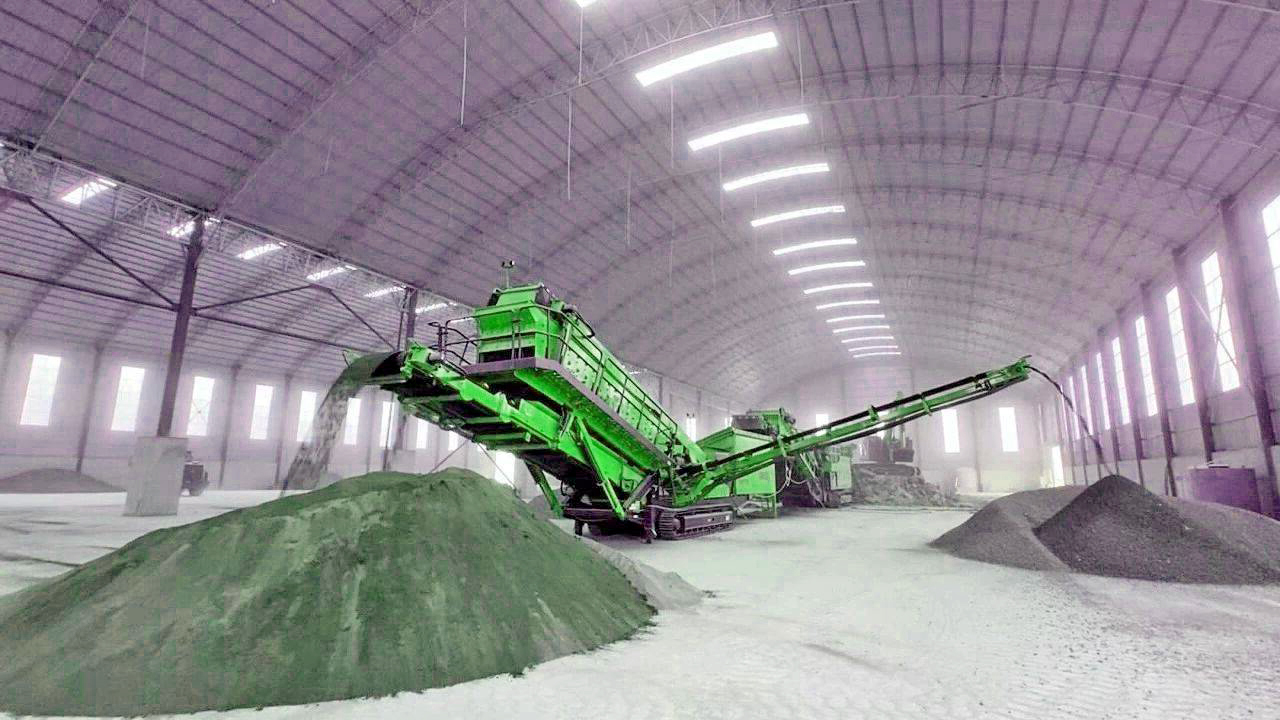
After construction waste is delivered to the plant, it is stockpiled in the raw material warehouse. Indoor storage yards partitioned by partial concrete retaining walls are adopted for classified storage. The waste is unloaded into yards by dump trucks and further stacked by loaders.First, construction waste of various particle sizes undergoes preliminary sorting. A vibrating feeder automatically feeds the materials into a jaw crusher for crushing. The discharged materials pass through a vibrating screen and are classified into coarse aggregates of 5–20 mm, coarse aggregates over 30 mm, coarse aggregates of 10–30 mm, fine aggregates of 0–5 mm, and fine aggregates of 0–3 mm.Aggregates sized 5–20 mm are sent to an impact crusher for fine crushing into 0–5 mm fine aggregates. All remaining aggregates are stored in aggregate silos inside the raw material warehouse for standby use.
Production of Recycled Bricks
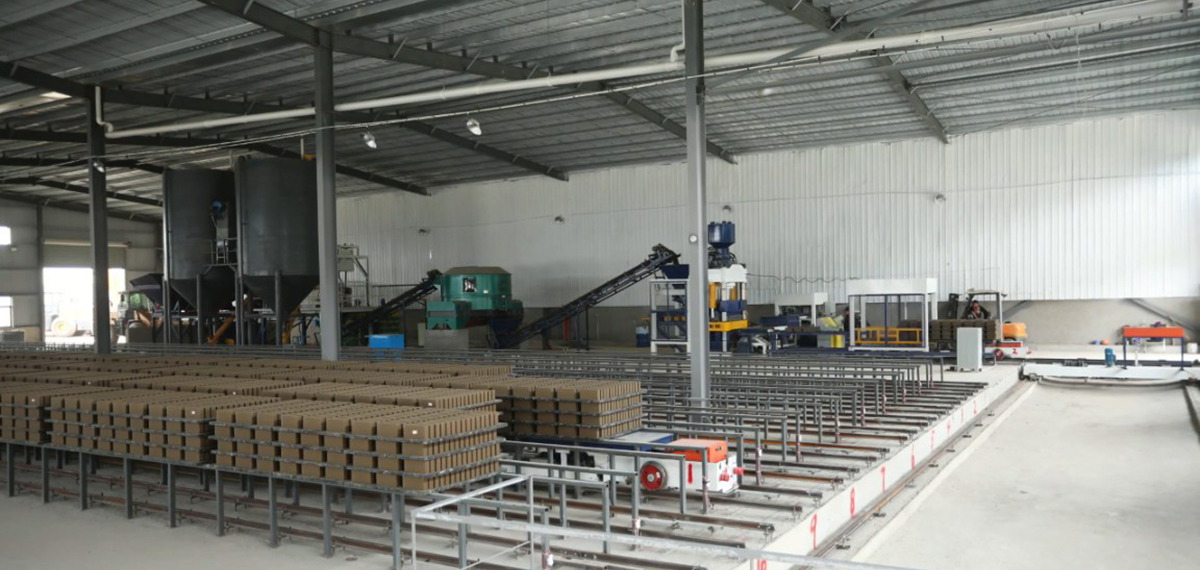
All procedures including raw material feeding, mixing, forming and conveying adopt closed automatic control. After forming, the recycled bricks are transported by a shuttle curing system into curing kilns (with parent-child trolley tracks) for a 7-day static curing period. Afterwards, the bricks are packed, transported to open yards by forklifts for natural curing, and then ready for factory delivery and sales.
The Block production line for construction waste can fundamentally resolve the disposal problem of discarded construction waste. It not only reduces environmental pollution caused by construction waste, but also conserves natural resources and cuts down the consumption of natural resources and energy. Boasting remarkable social, economic and environmental benefits, it complies with the requirements of sustainable development and serves as one of the primary approaches to developing green building materials.
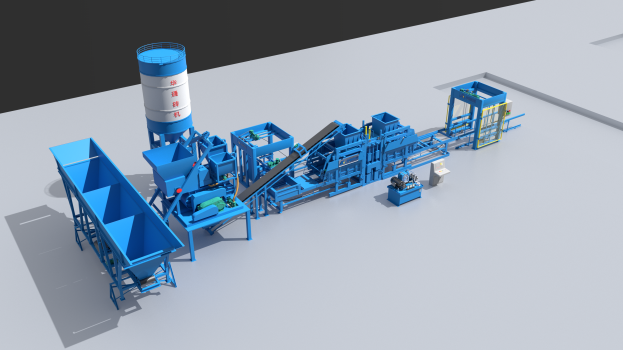
- Construction muck or crushed and screened construction waste is weighed, followed by the addition of matched curing agents.The bonding force between materials and aggregates is enhanced, which improves the elastic modulus and flexibility of finished products.
- Grading at the batching stationAggregates serve as the skeleton in non-fired bricks, forming the main framework of the material and bearing external loads. The compactness of aggregate stacking, namely aggregate grading, largely determines the mechanical properties, durability and economic performance of non-fired bricks.
- Materials are delivered via belt conveyor to the planetary mixer for mixingForced planetary mixers are adopted to achieve uniform blending of raw materials.
- Mixed materials are conveyed to the mixing wheel roller mill for roller millingThe roller milling process activates raw materials, mixes components, crushes coarse particles and plasticizes mixtures. It increases the compactness and optimizes the performance of mixtures to upgrade product quality.
Equipment Name
Equipment Pictures
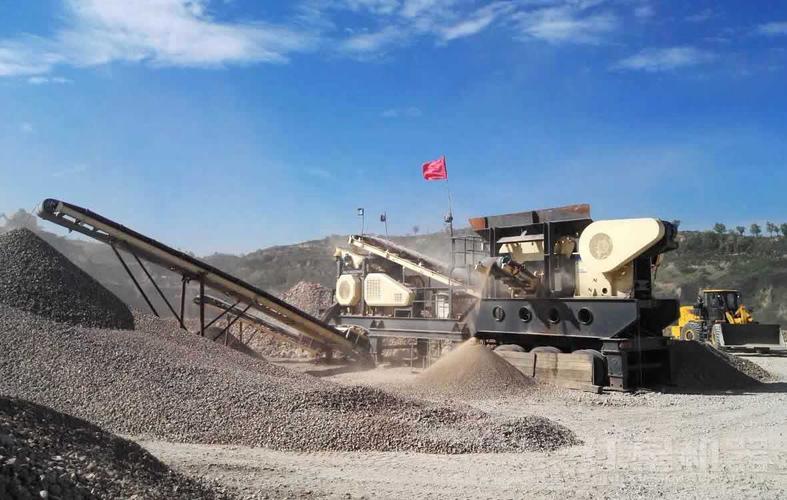
Crushing Production Line
The construction waste production line consists of vibrating feeder,
jaw crusher, double-tooth roller crusher, double roller crusher,
belt conveyors, electric control system and other equipment.
It features high automation, good adaptability to steel bars
and high-moisture materials, and large output capacity.
Except for regular startup, shutdown and daily maintenance
of the equipment, the construction waste production line
basically requires no manual operation.

Batching and Mixing System
Accurate Proportioning & Stable Finished Products Equipped
with high-precision weighing and real-time moisture correction functions,
the system eliminates the pain points of large fluctuations in gradation
and moisture content of construction waste aggregates between batches.
It ensures consistent compressive strength, water absorption rate
and drying shrinkage value of bricks in every batch, complying with
municipal engineering inspection standards.

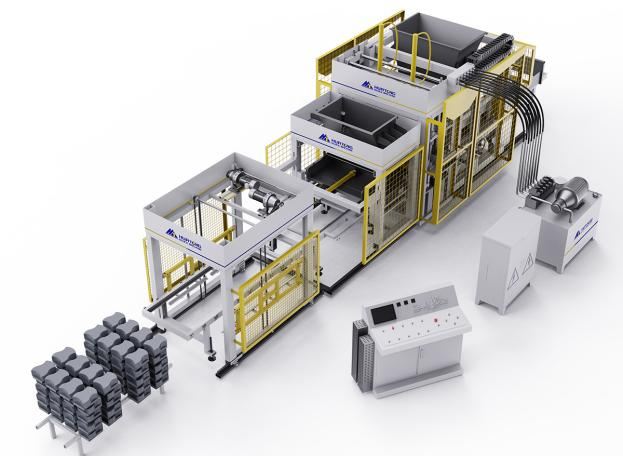
Block Forming System
The block forming system serves as the core forming equipment
of the entire brick production line. It receives activated mixed
materials conveyed from the batching and mixing system.
Adopting high-pressure static pressing forming technology,
it once compresses the mixture of recycled aggregates,
cement and curing agent into finished products of standard specifications,
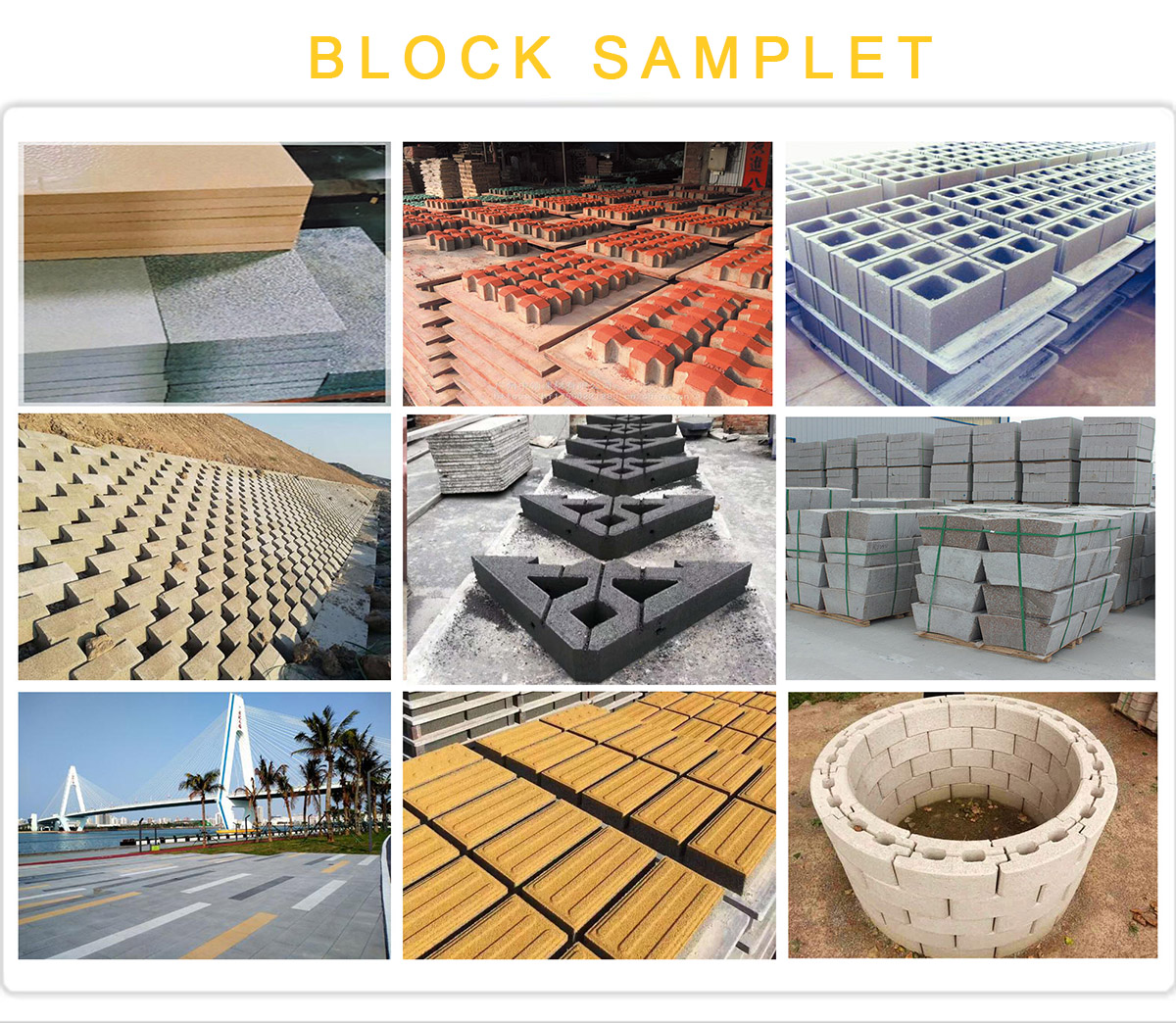
including non-fired blocks, paving bricks, water-permeable bricks,
curb stones and so on.The whole system features high automation,
adjustable pressing force and dense forming effect.
It is well compatible with recycled construction waste raw materials.
The formed green bricks boast high strength, regular dimensions
and low drying shrinkage rate. After forming, the green bricks
can be directly transferred for curing, greatly improving the finished
product qualification rate and production efficiency.

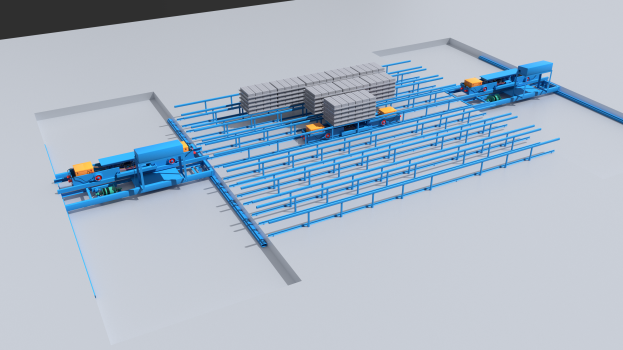
Automatic Curing System
Two-stage layered curing process: the green bricks are first kept in
airtight static curing to lock moisture and boost early strength,
followed by natural air-drying to control moisture content,
which thoroughly solves the problem of easy drying shrinkage
and cracking of recycled aggregates.
Equipped with fully automatic shuttle mother-son trolleys
and airtight curing kilns, the whole process requires no manual handling,
drastically reducing the breakage rate of green bricks.

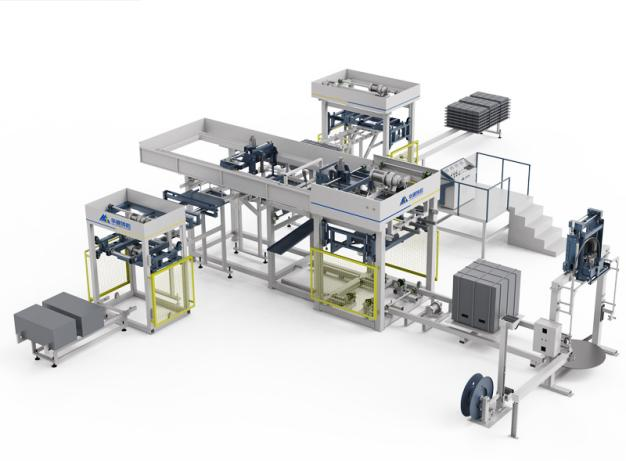
Automatic Palletizing System
This intelligent brick stacking equipment adopts a palletizing
layout design with reserved gaps. It is a dedicated brick stacking system
developed to replace manual stacking of finished bricks on production lines.
It solves the problems of high labor intensity and low production efficiency,
and realizes mechanized loading and unloading of finished bricks for delivery.
The system can be installed independently near the finished brick
curing yard to stack cured products on site.
It can also be connected in series with the block forming production line
and automatic curing system to realize online palletizing operation.

- Materials are transported by conveyor to the block forming machine for compression moldingFor heavy aggregate high-strength non-fired bricks, the molding pressure shall be controlled within 18–20 MPa. For lightweight aggregate low-strength non-fired bricks, the molding pressure should be set at 10–15 MPa to avoid excessive compression of lightweight aggregates and loss of their lightweight characteristics.

- Molded bricks are transported by shuttle trolleys to track curing kilns for 7 days of static curing
Static Curing Explanation
Freshly pressed non-fired bricks lack sufficient strength for direct stacking and thus require static curing.

Brick and pallet separation, packing, and transportation to the storage yard via forklifts for natural curingWater is sprayed on brick stacks three times daily (morning, noon and evening), with natural air-drying applied for the rest of the day. Relevant tests show that the moisture content of bricks drops below 2–4% by the 28th curing day. At this stage, the relative moisture content is low, resulting in minimal drying shrinkage. The drying curing process does not hinder strength gain of bricks. The maximum water absorption rate of finished bricks is ≤10%, and the relative moisture content can be easily maintained below 40%.


